Heritage & stories
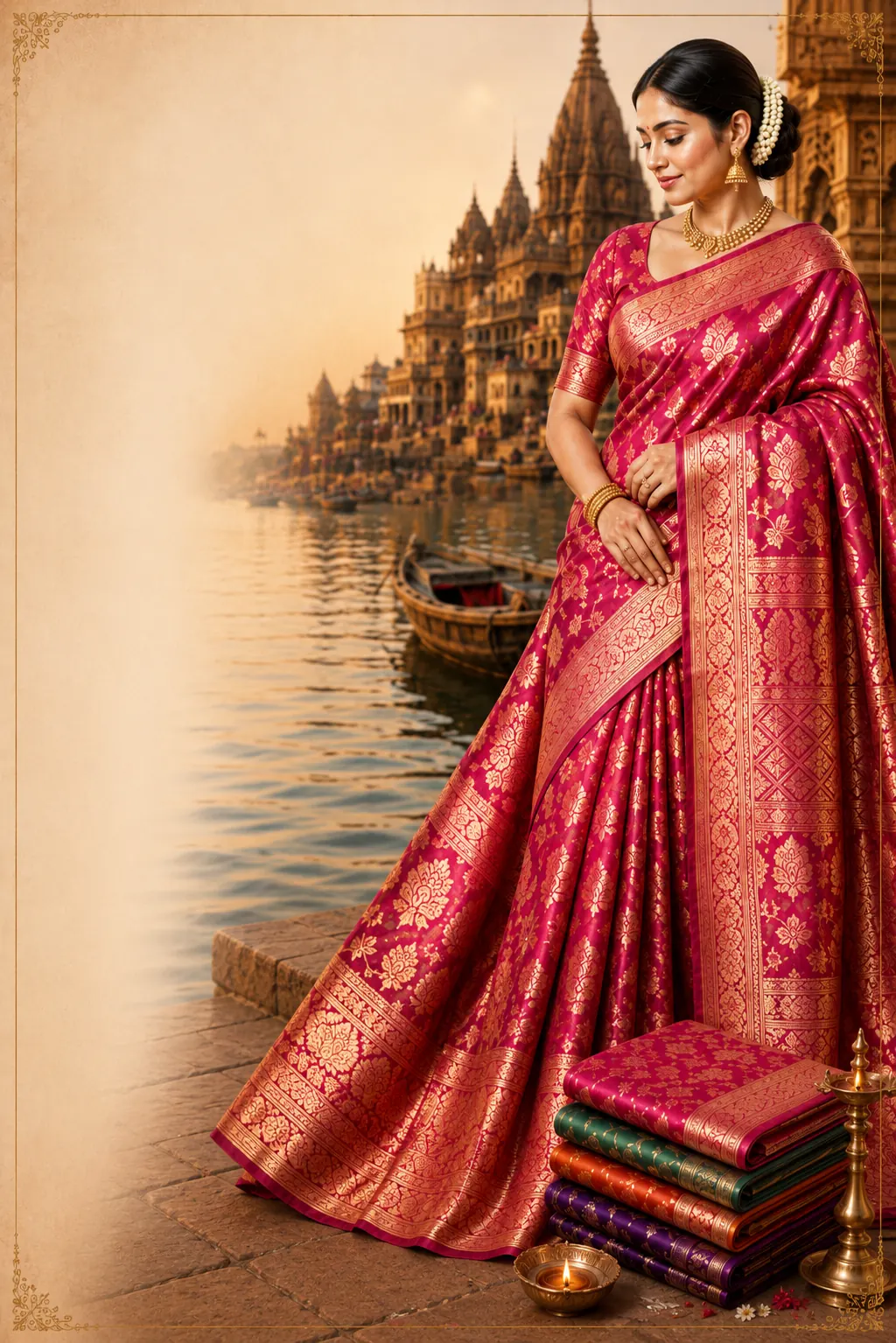
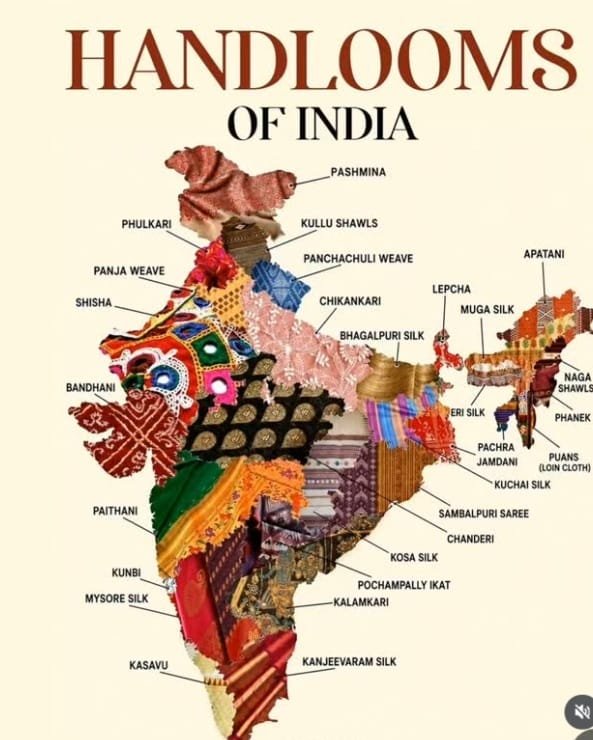
India's handloom story
Ambashree celebrates Indian textile traditions through craft, region and the people behind the loom.
Silk is chosen for how it falls and lasts. Our zari and borders honour classic motifs while remaining light enough for every occasion that matters.
Regional stories
Silks woven across India
A visual journey through regional traditions, motifs and weaving identities.
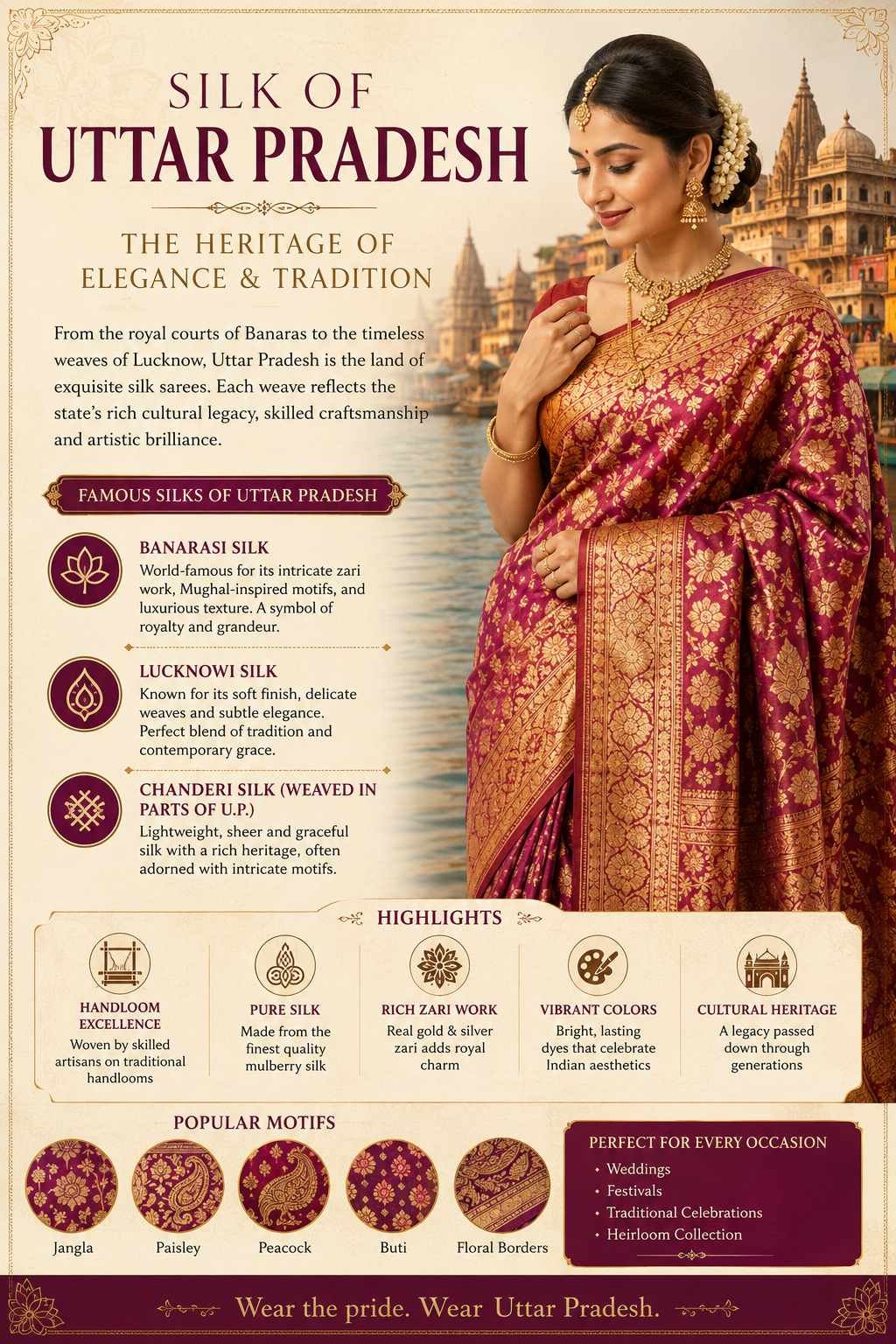
Uttar Pradesh
Banaras Brocades and Sarees are GI-registered handicrafts of Uttar Pradesh, centred on the historic weaving tradition of Varanasi. Luxurious silk, intricate brocade and elaborate zari work give Banarasi sarees their celebrated richness and ceremonial grandeur.
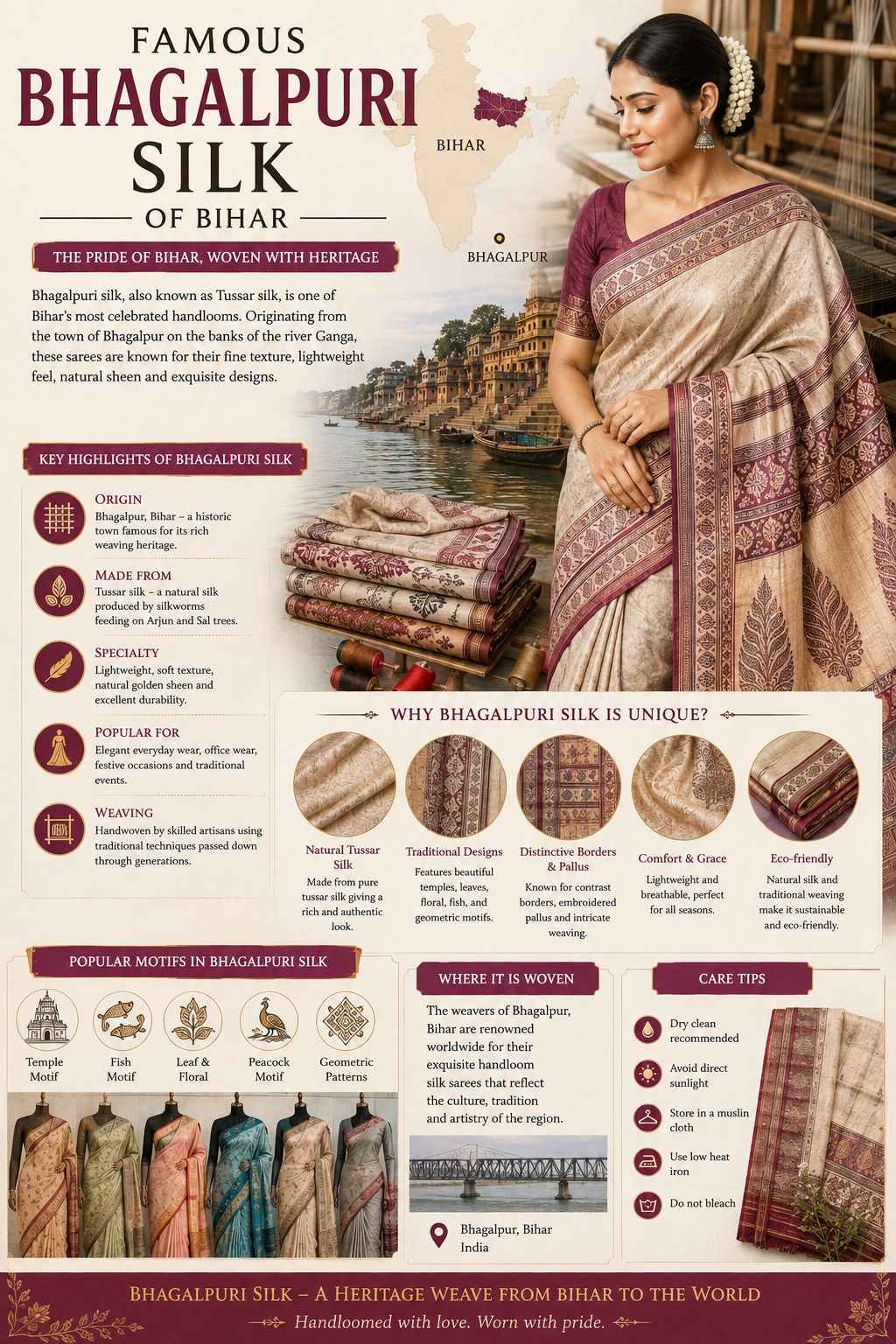
Bihar
Bhagalpur Silk with its Its rich texture and characteristic silk appearance is a registered GI textile of Bihar and represents the long-established silk-weaving tradition centred around Bhagalpur.
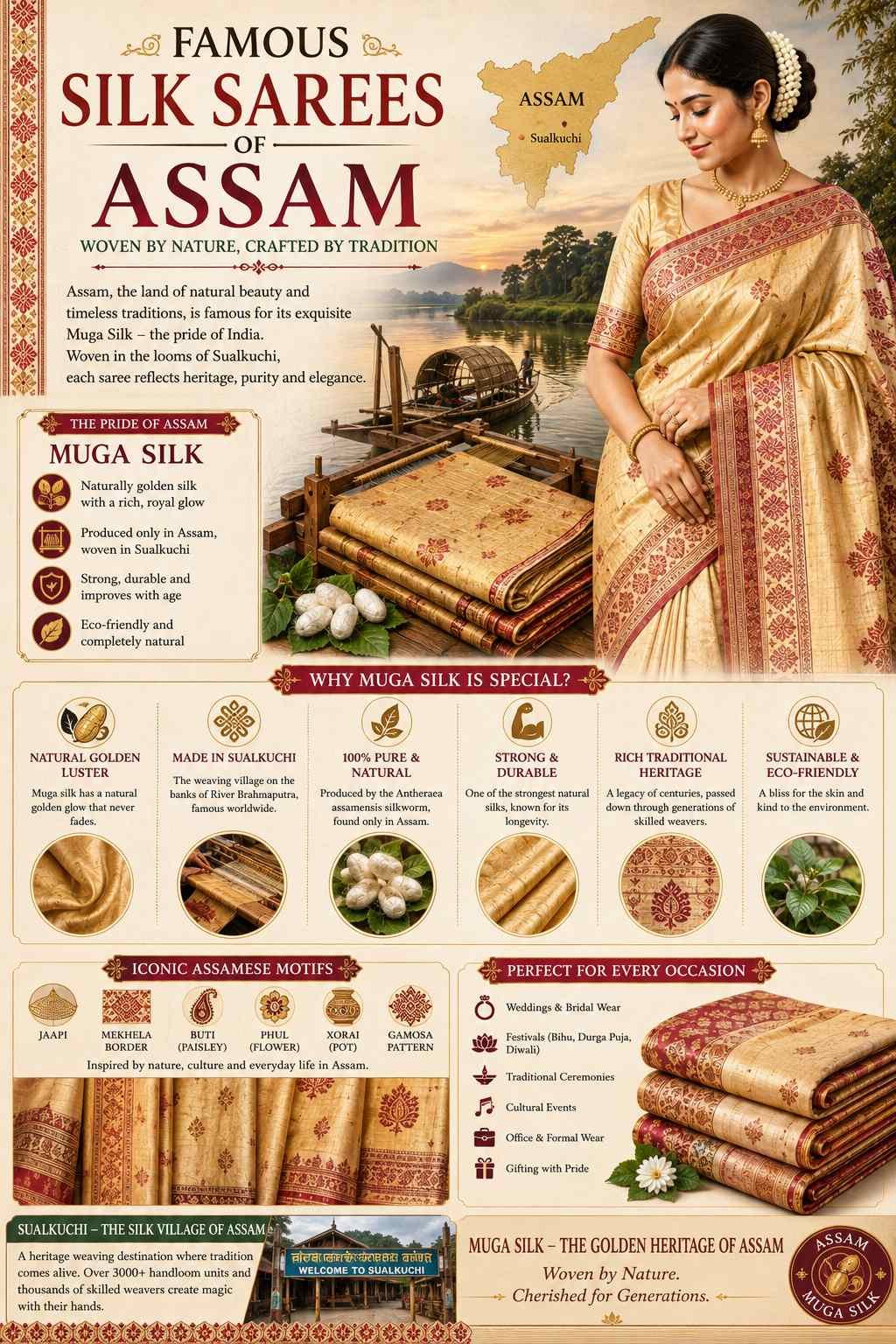
Assam
Muga is Assam’s celebrated indigenous wild silk, distinguished by its naturally yellowish-golden colour, glossy sheen and exceptional durability.
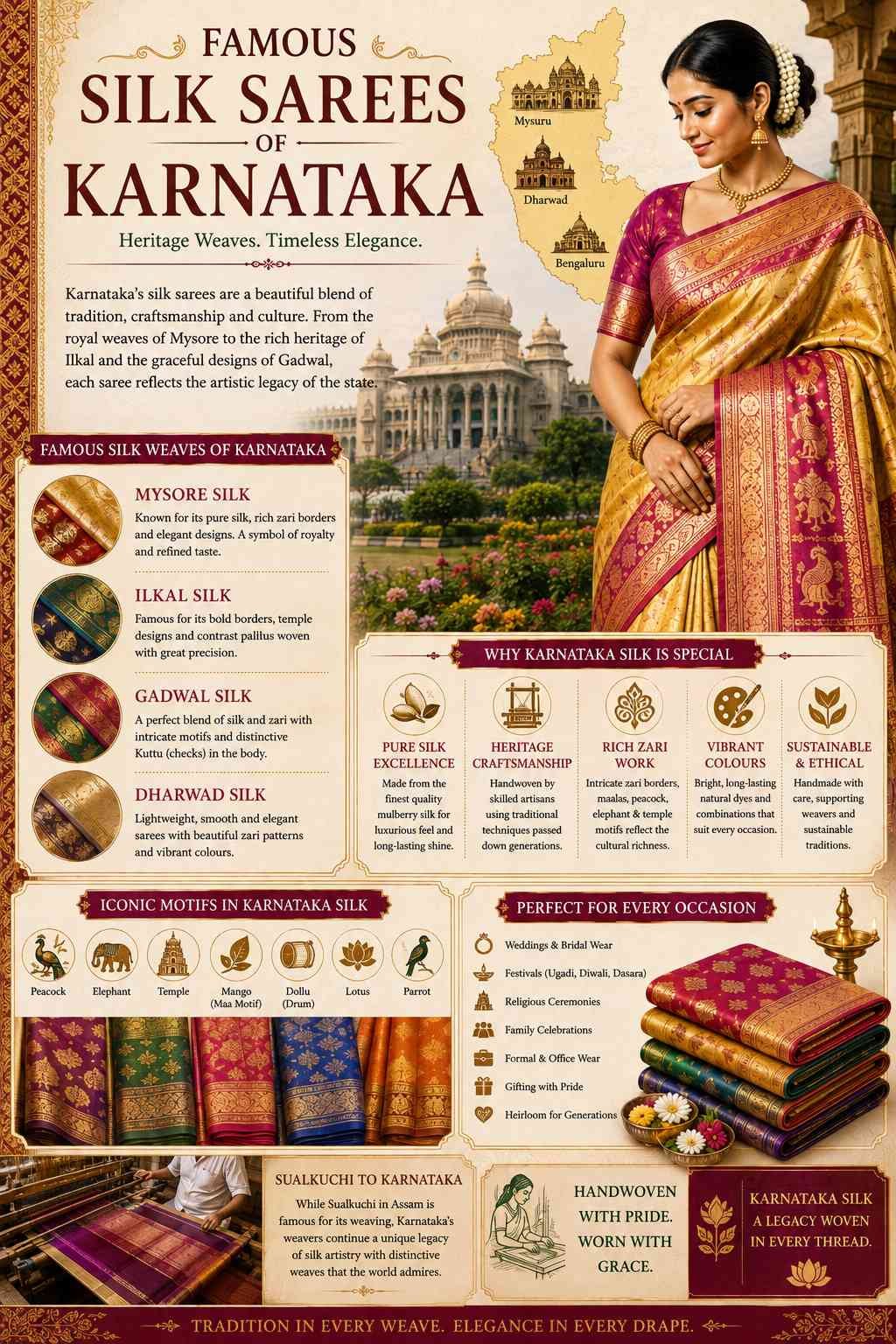
Karnataka
Karnataka has a distinguished silk tradition centred on fine mulberry silk, popularly represented by Mysore Silk sarees. Known for smooth texture, rich colours and elegant zari borders, the saree reflects Karnataka’s longstanding association with quality silk production.
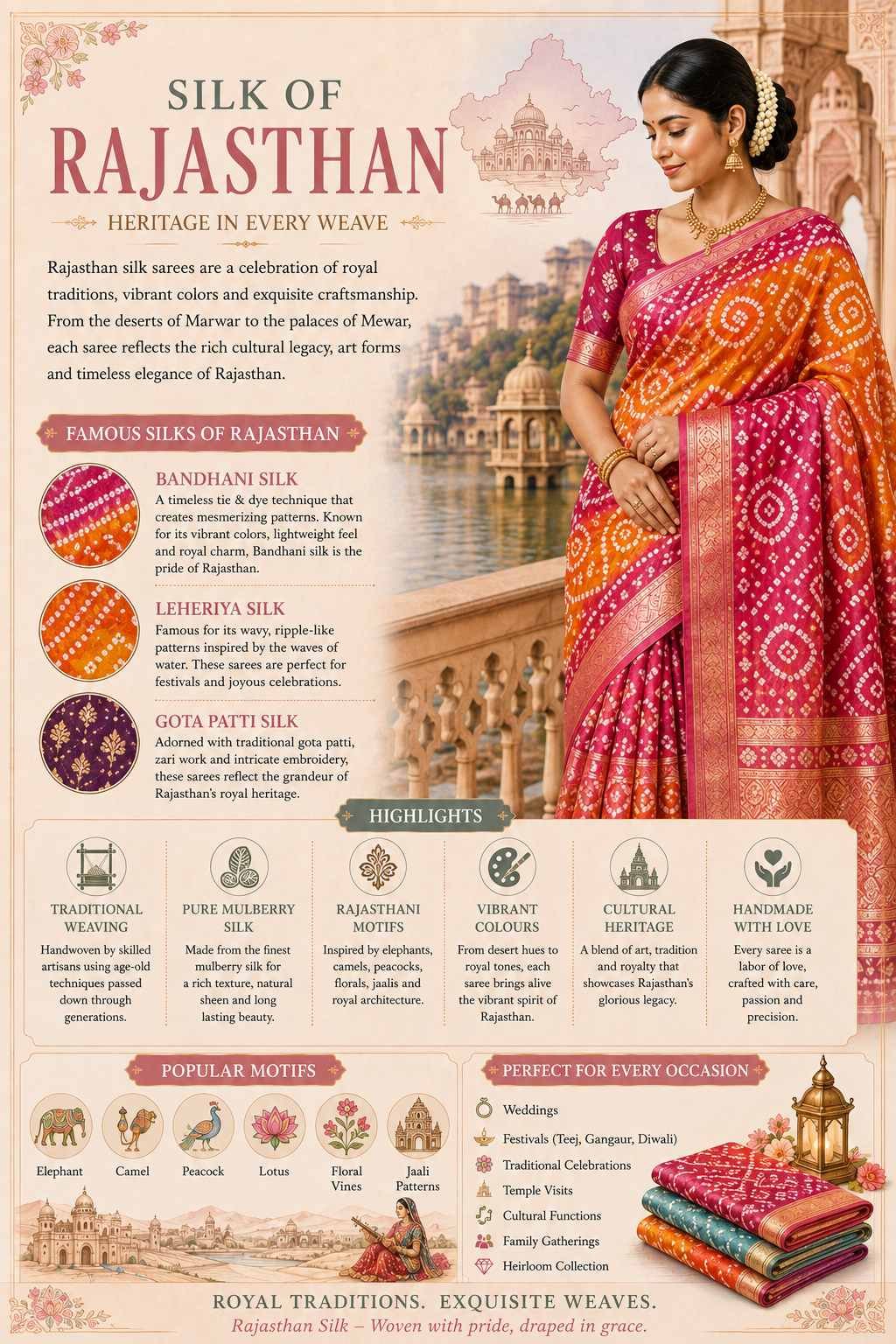
Rajasthan
Rajasthan’s Kota Doria is renowned for its exceptionally lightweight fabric and characteristic square-check structure created during weaving. Its airy texture and understated elegance make it especially suited to Rajasthan’s climate and graceful traditional drapes.
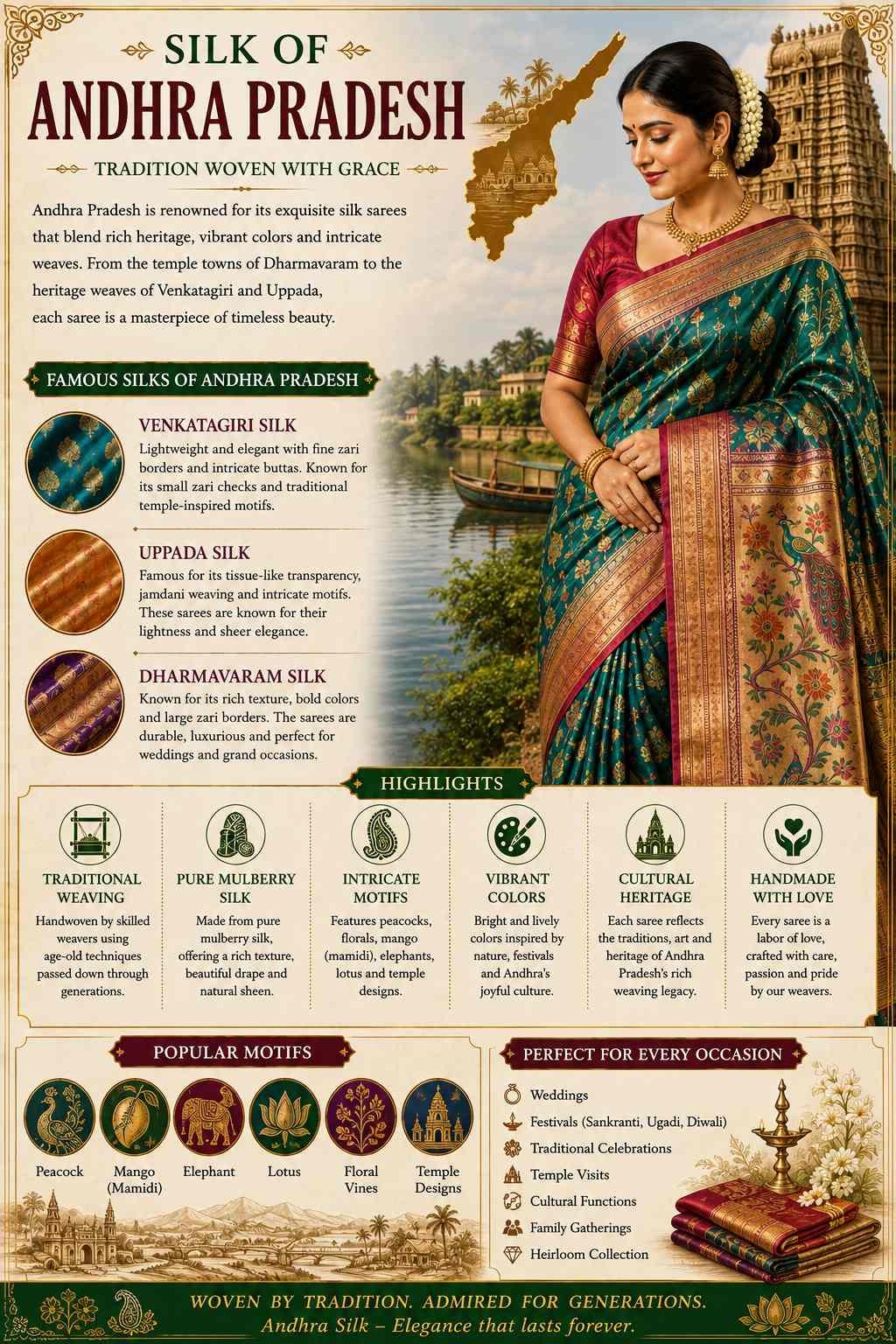
Andhra Pradesh
Uppada & Venkatagiri Uppada is celebrated for lightweight Jamdani-style weaving, while Venkatagiri is known for fine, elegant handloom sarees, represent tradition of delicate weaving, refined motifs and graceful drape.
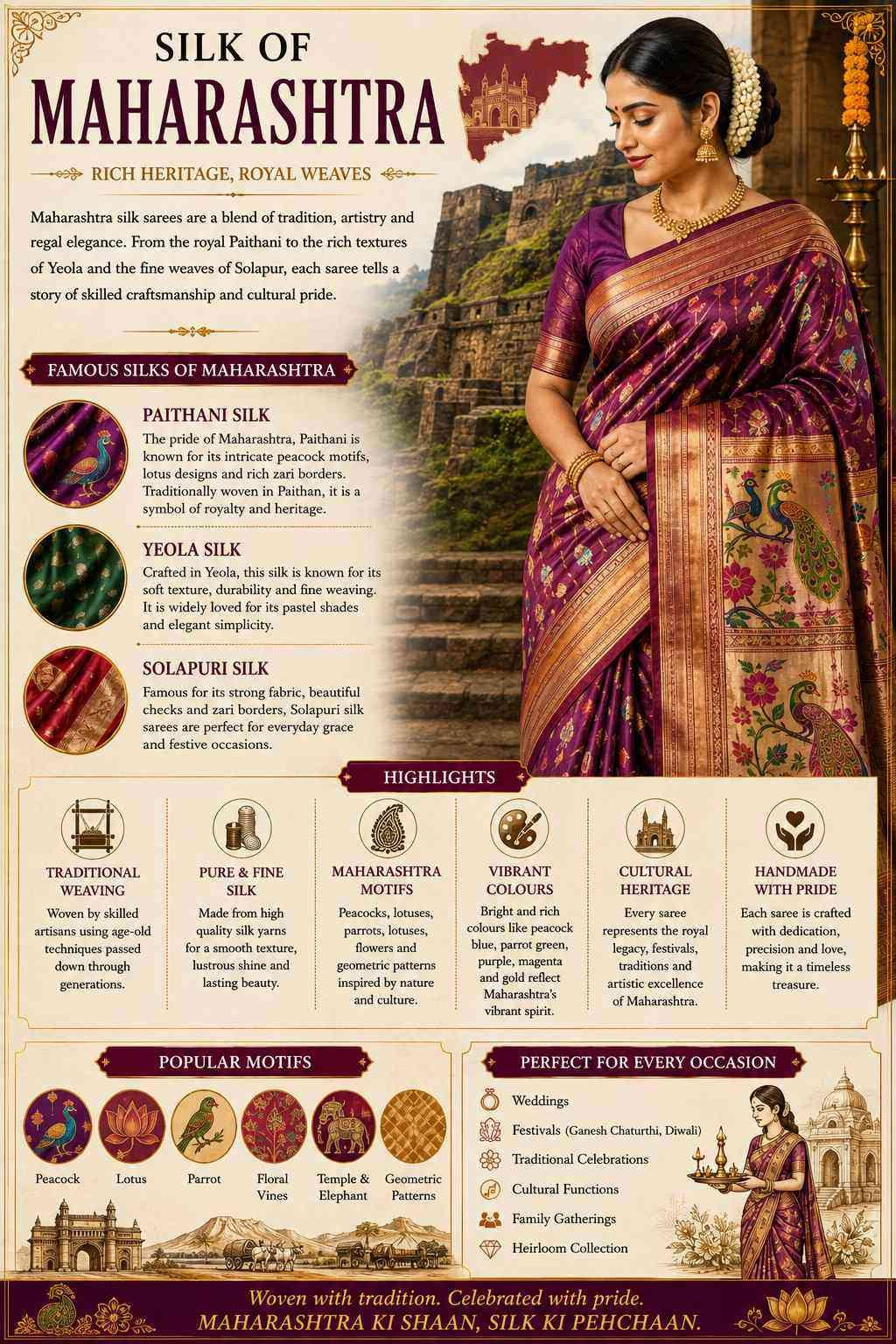
Maharashtra
Paithani Sarees and Fabrics are GI-recognised products of Maharashtra and form one of the state’s most prestigious weaving traditions. Rich silk, ornamental borders and elaborate traditional motifs give Paithani its unmistakable ceremonial and heirloom character.
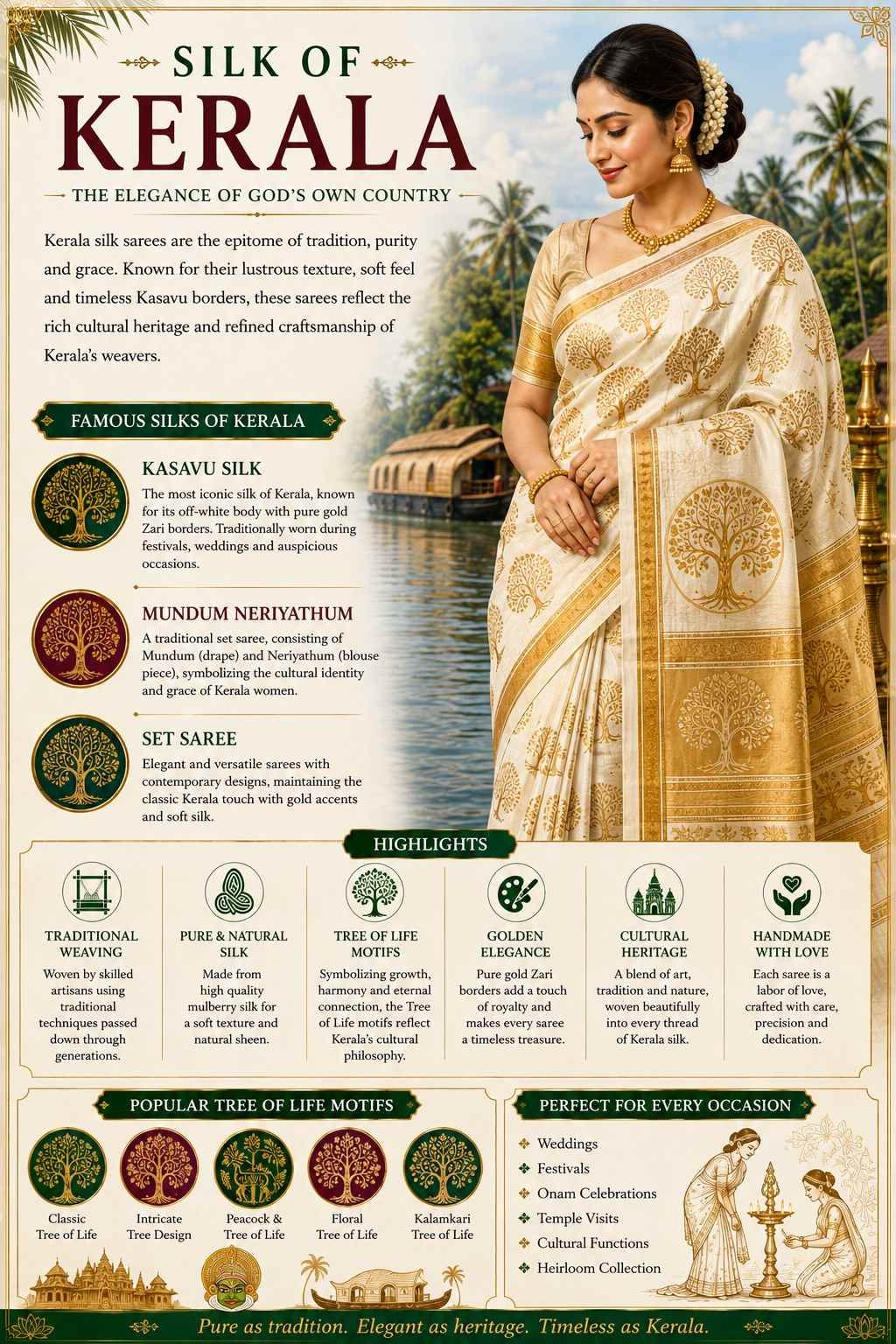
Kerala
Kerala’s celebrated handloom tradition includes Kasaragod, Kuthampully, Chendamangalam and other officially recognised regional sarees. The characteristic Kerala aesthetic favours elegant light-coloured fabric with contrasting or golden borders and an understated ceremonial appearance.
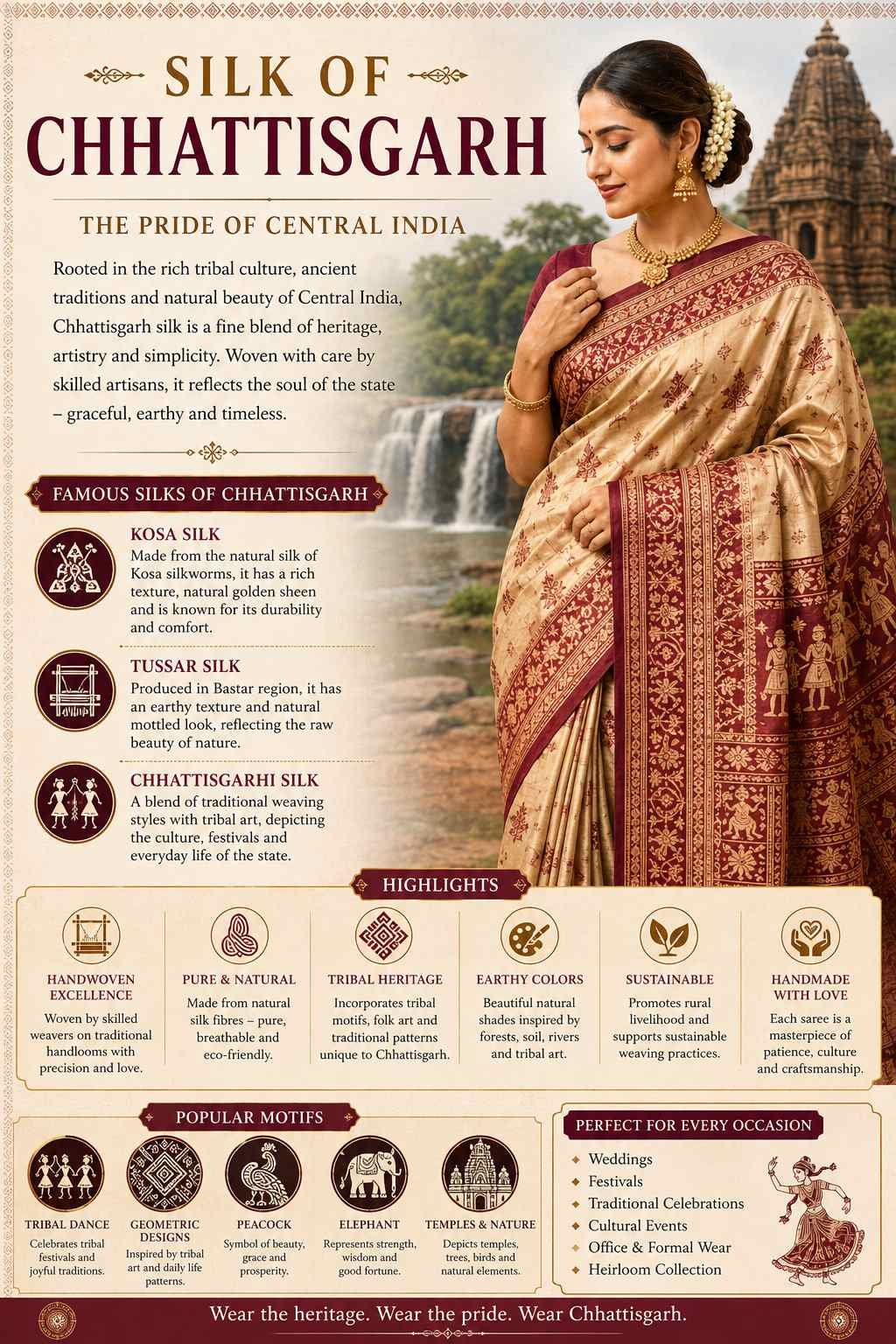
Chhattisgarh
Kosa, Champa Silk Saree and Fabrics is associated with Chhattisgarh and its traditional silk-weaving heritage. Its handloom character connects the saree with the state’s longstanding tradition of silk production and artisanal weaving.
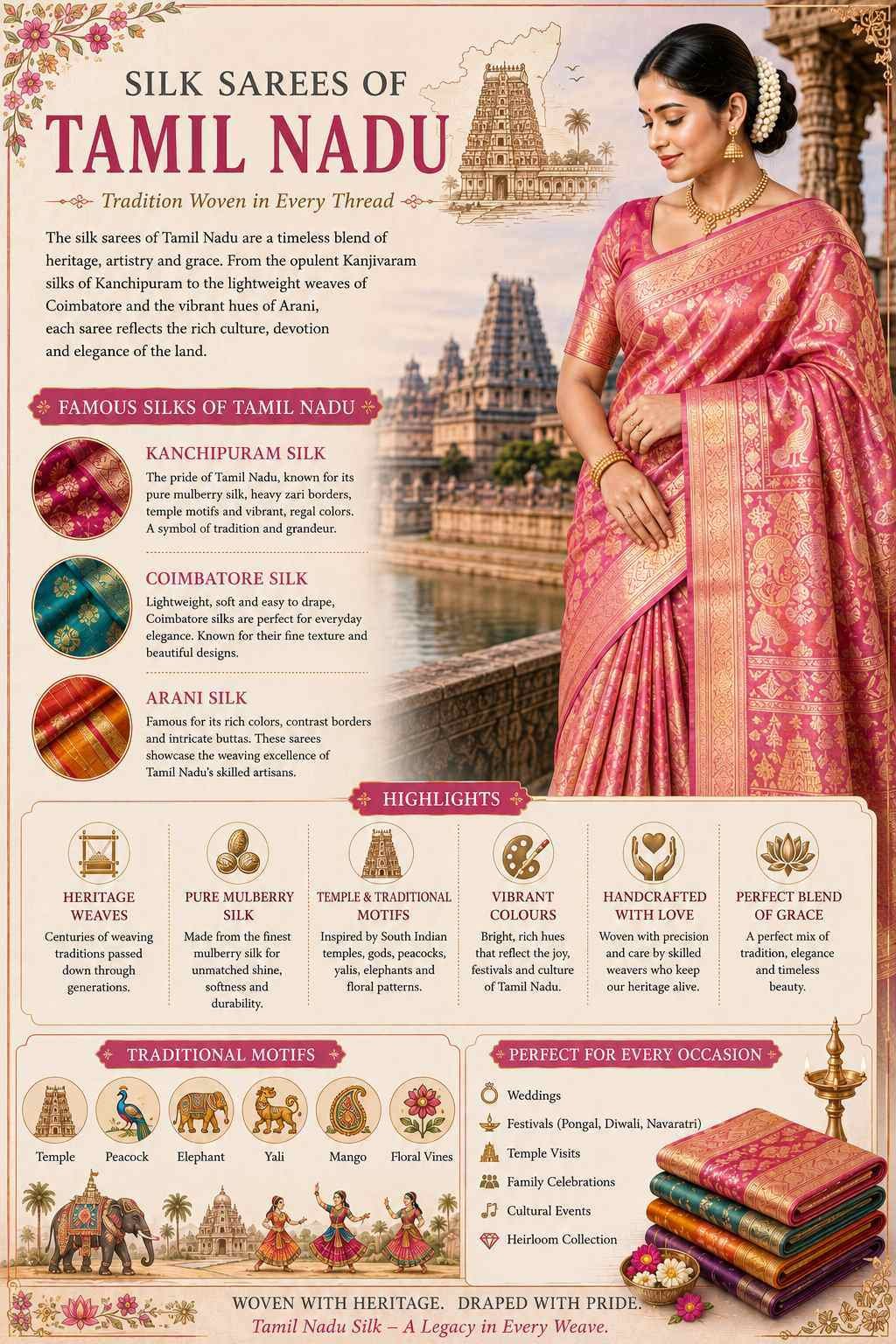
Tamil Nadu
Kanchipuram Silk Sarees are among Tamil Nadu’s best-known GI-protected textiles, celebrated for rich silk construction and striking contrasting borders. Their lustrous fabric, zari work and temple-inspired traditional designs have made them enduring favourites for weddings and ceremonial wear.
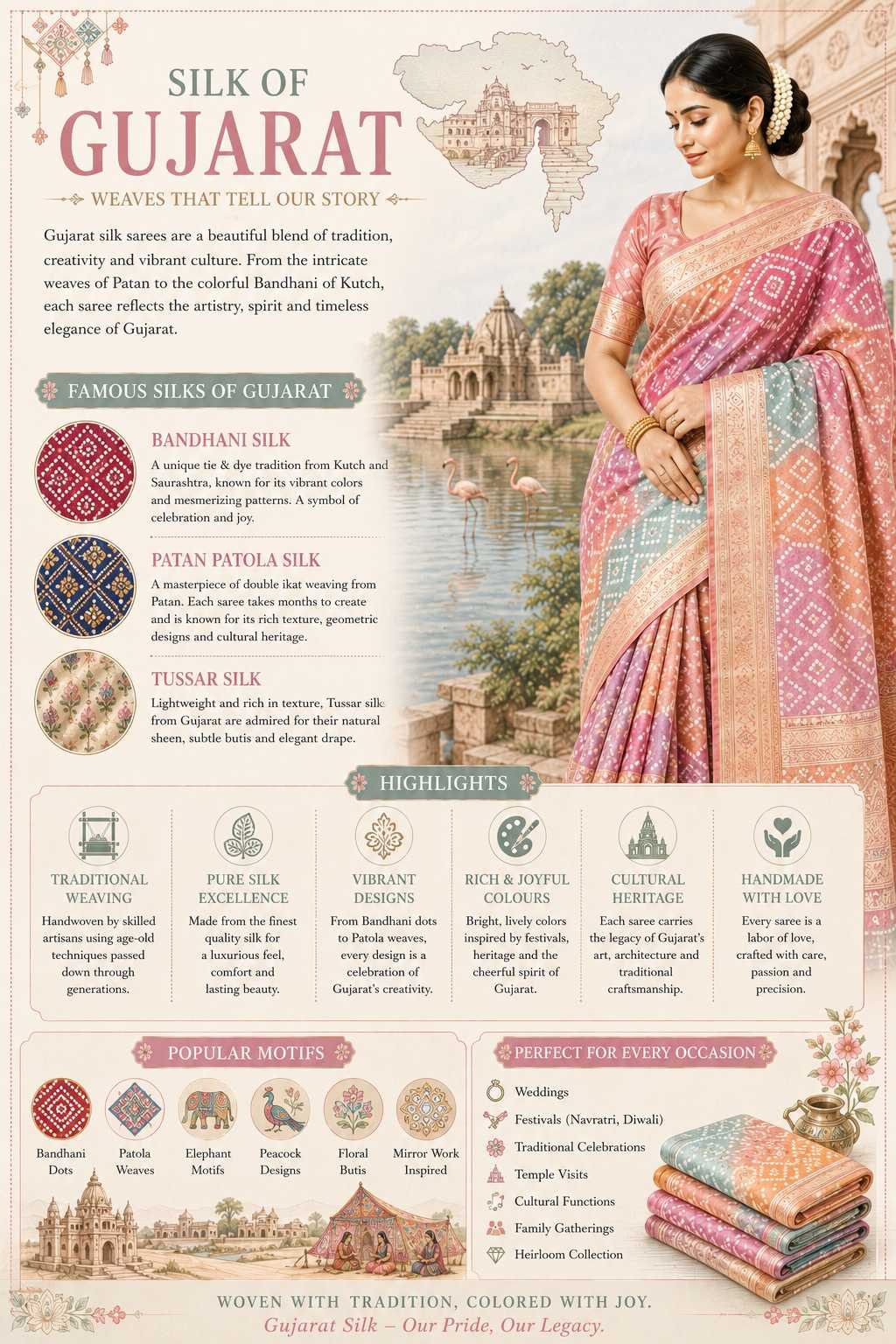
Gujarat
Patan Patola is Gujarat’s celebrated double-ikat textile, created by precisely resist-dyeing both warp and weft before weaving. Its intricate geometric designs, vibrant colours and extraordinary weaving precision have made Patola one of India’s most prestigious heritage textiles.
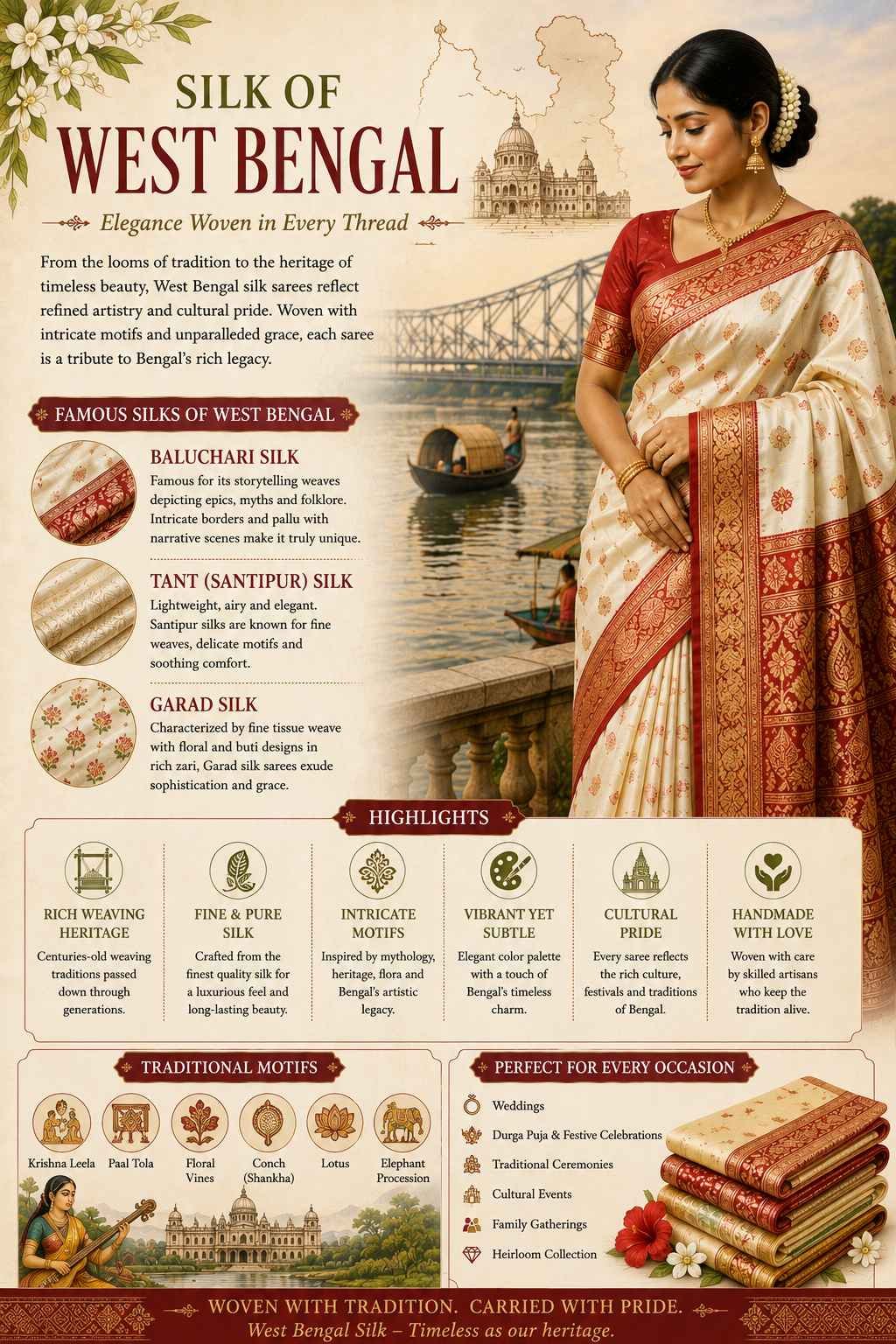
West Bengal
Baluchari Saree is a registered GI handicraft of West Bengal, renowned for elaborate woven designs and narrative decorative work. Its richly ornamented pallu and traditional motifs distinguish Baluchari as one of Bengal’s most recognisable heritage sarees.
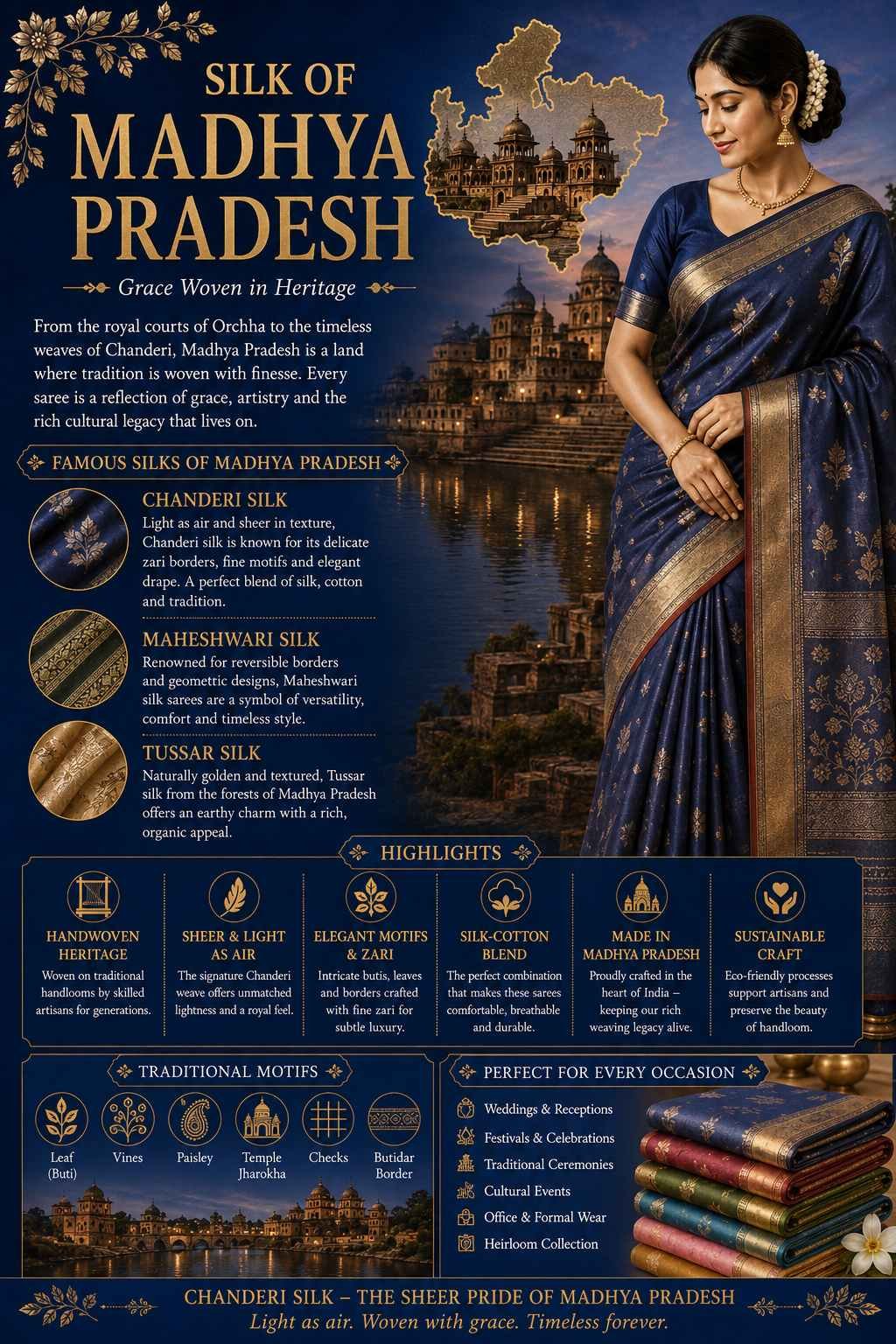
Madhya Pradesh
Chanderi is a GI-registered textile of Madhya Pradesh, prized for its exceptionally lightweight, sheer texture and delicate zari ornamentation. Pastel shades remain especially popular, while traditional motifs draw inspiration from flowers, fruits, leaves and birds.
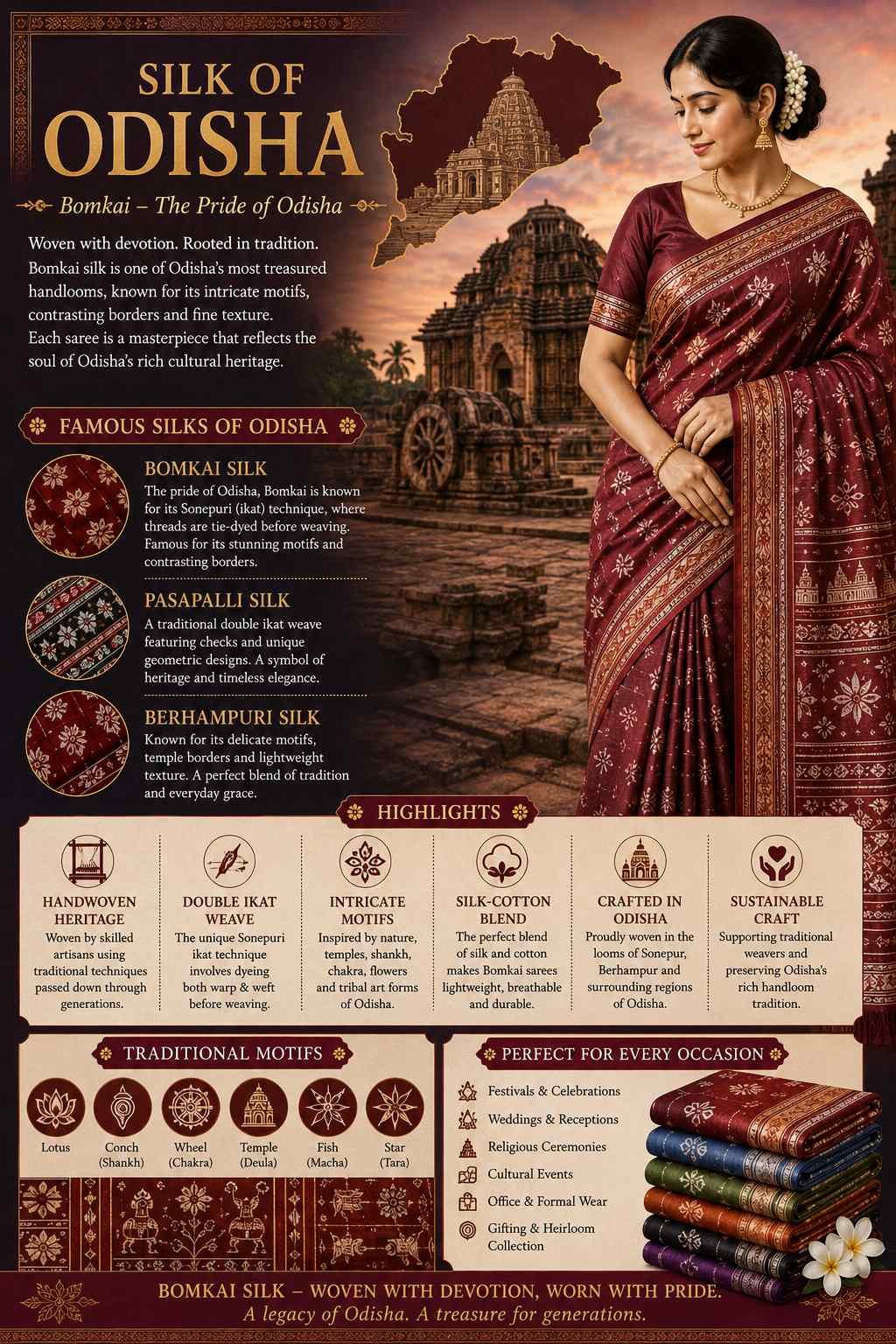
Odisha
Bomkai Saree and Fabrics is a registered GI textile of Odisha, alongside Sambalpuri Bandha, Khandua and several other recognised weaving traditions. Bomkai combines traditional weaving with distinctive supplementary motifs and contrasting borders rooted in Odisha’s rich handloom heritage.
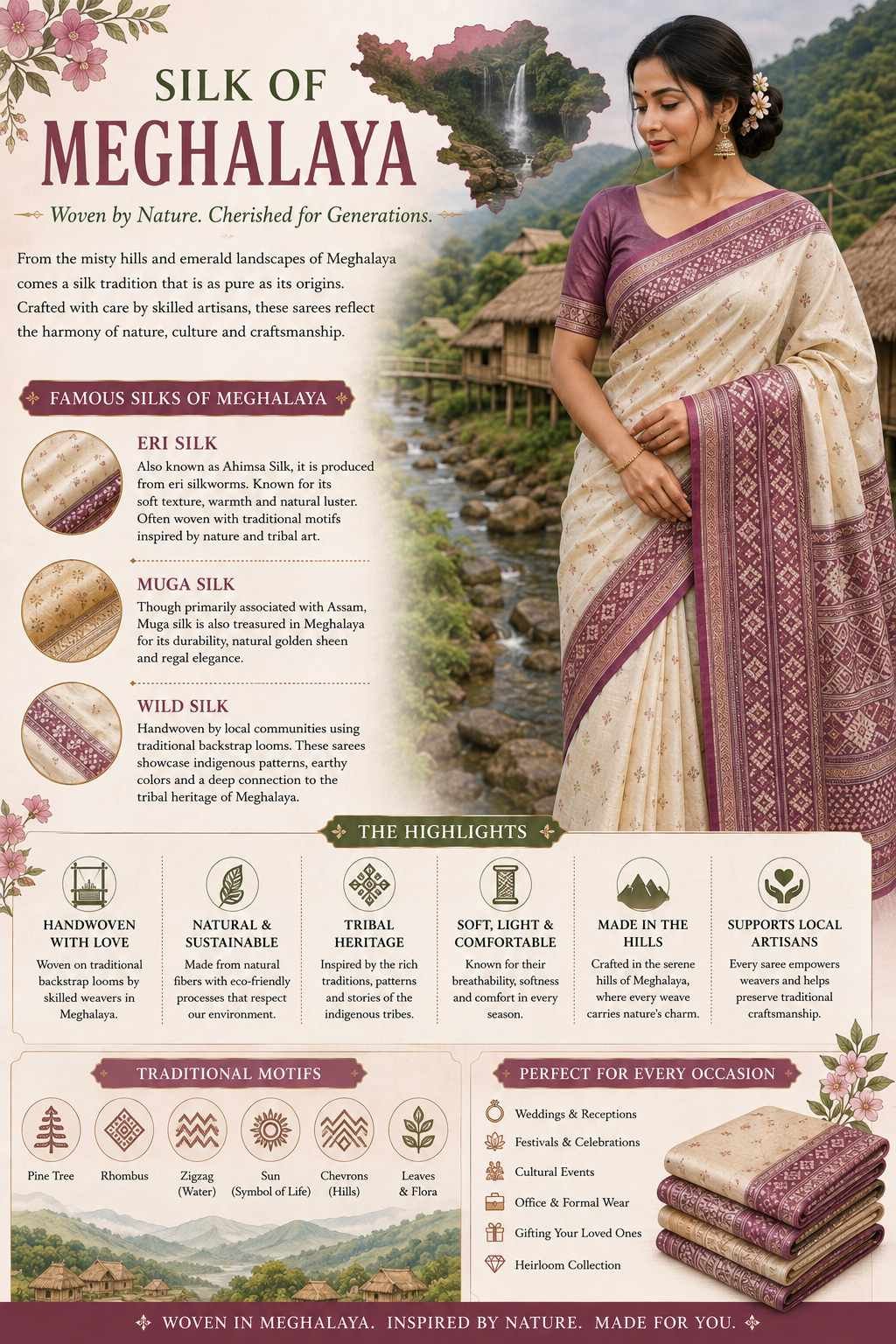
Meghalaya
Meghalaya’s silk identity is strongly associated with Eri, locally known as Ryndia, valued for its soft, warm and naturally textured character. Its handwoven tradition is closely connected with local communities, indigenous craftsmanship and the natural-dye heritage of Meghalaya.
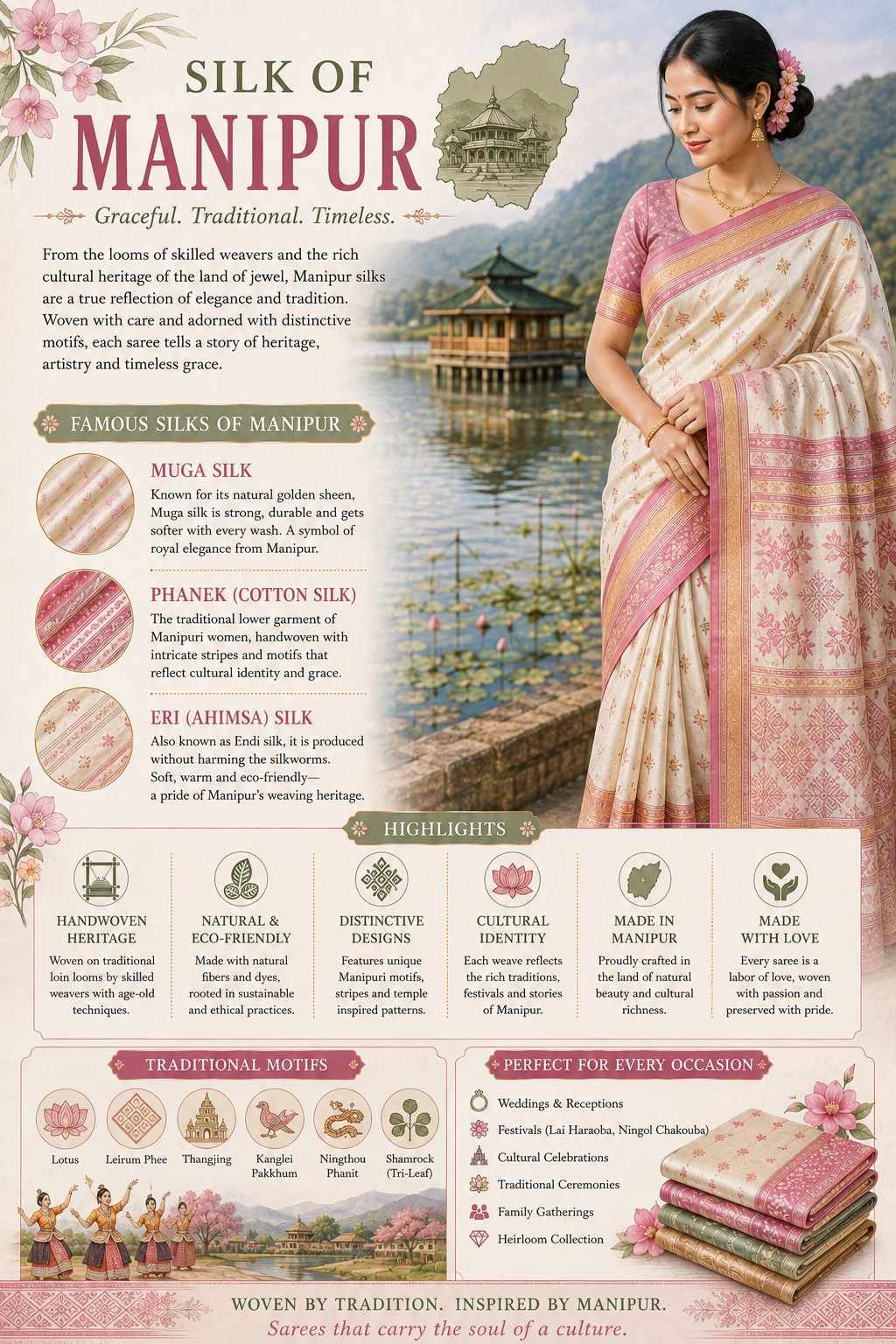
Manipur
Moirang Phee is Manipur’s GI textile, traditionally woven in silk and cotton and distinguished by the stepped Moirang Pheejin border motif. Traditional colours include red, black, yellow and green, often contrasted against lighter backgrounds.
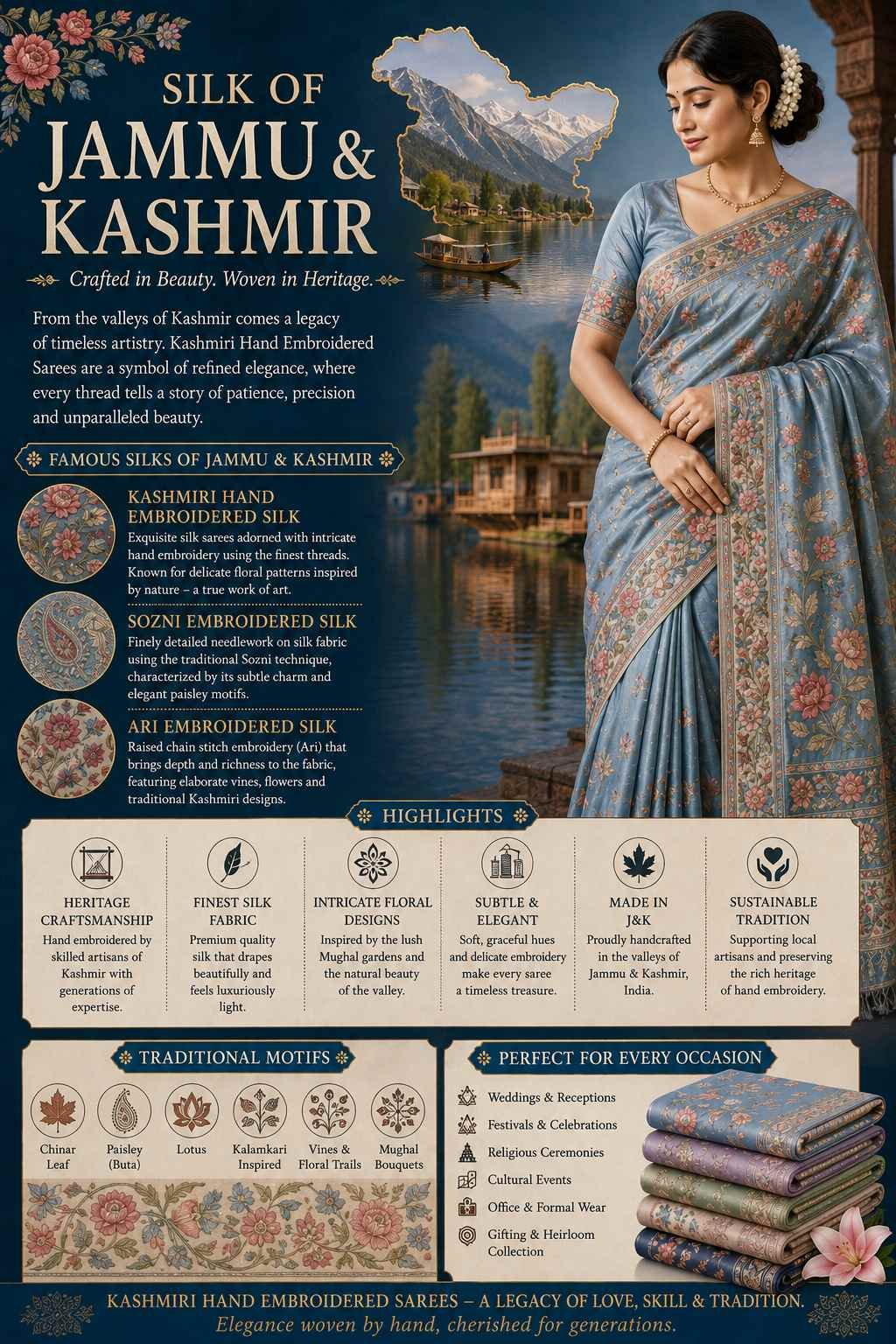
Jammu Kashmir
Kashmiri silk sarees are distinguished by delicate Sozni and Aari embroidery, often featuring chinar leaves, paisleys, flowers and vines inspired by the Kashmir Valley. Fine silk, intricate hand embroidery and elegant floral detailing give these sarees their refined character while carrying forward Kashmir’s celebrated artisan tradition.
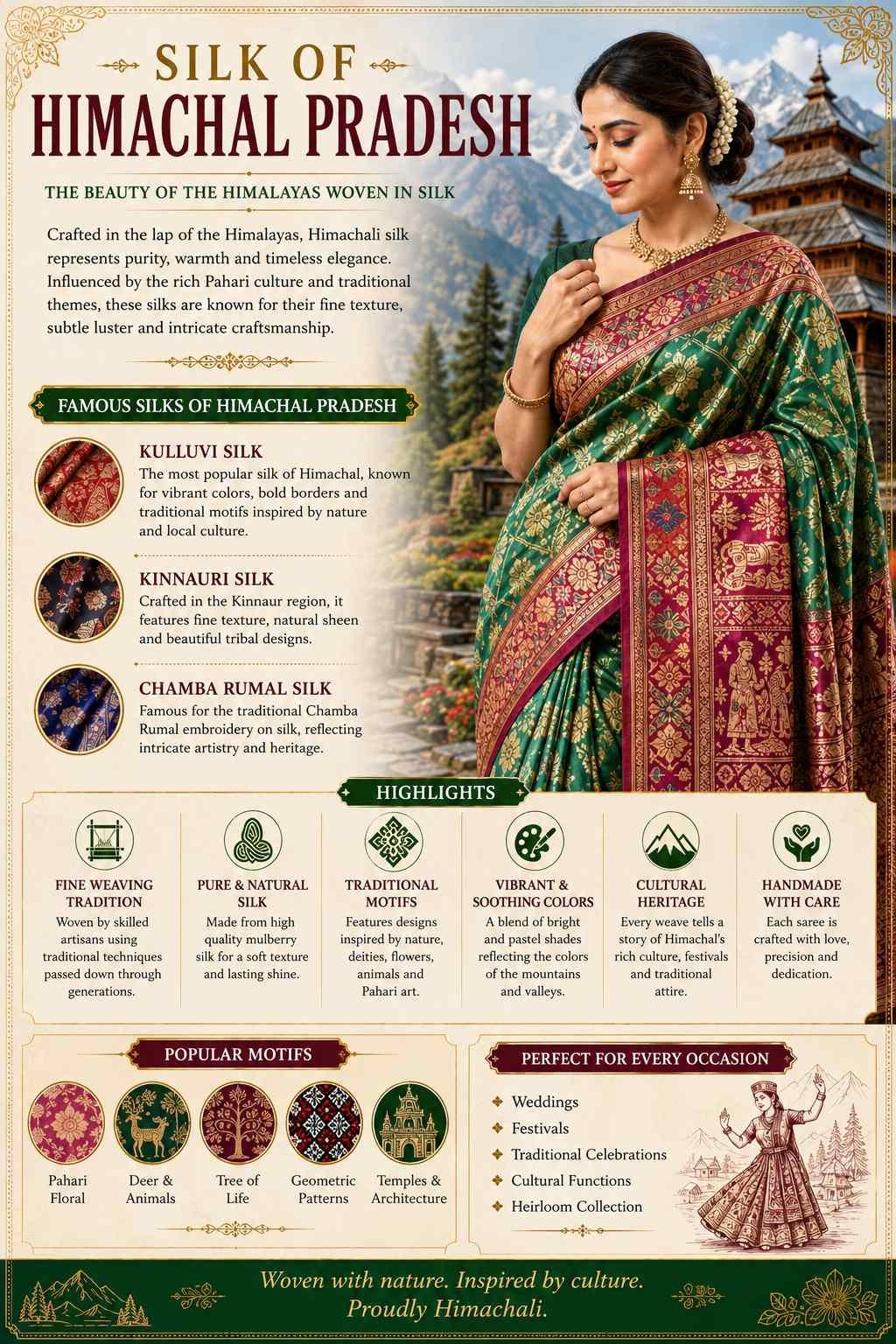
Himanchal Pradesh
Himachal Pradesh is renowned for Kullu and Kinnauri handwoven textiles, with Kinnauri Shawl officially recognised as a GI handicraft.
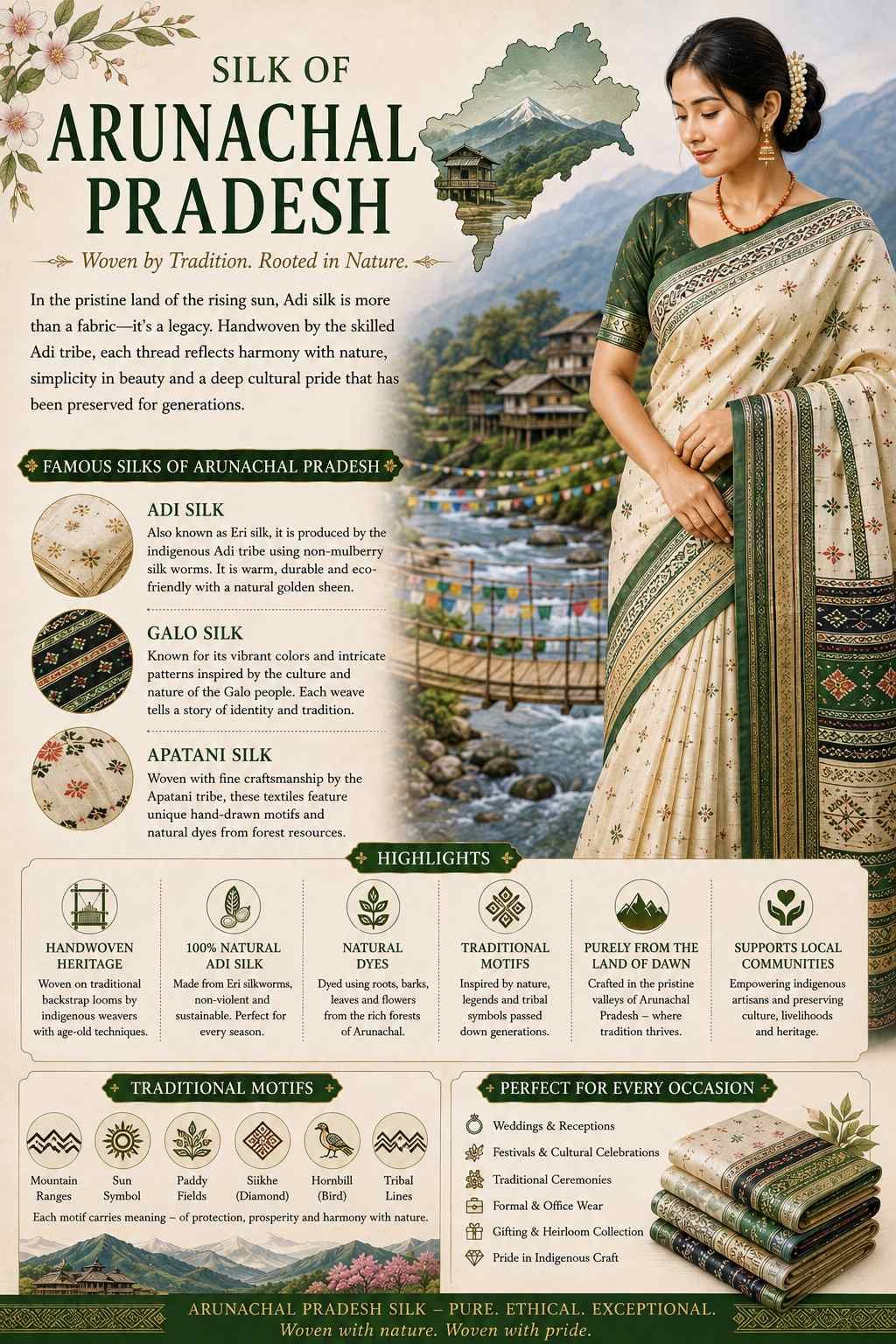
Arunanchal Pradesh
Arunachal Pradesh has rich indigenous weaving traditions, Adi Silk is one of the its Best saree
The artisan lens
Craft is the luxury
Skilled weaving, regional knowledge and the slow intelligence embedded in handmade textiles.